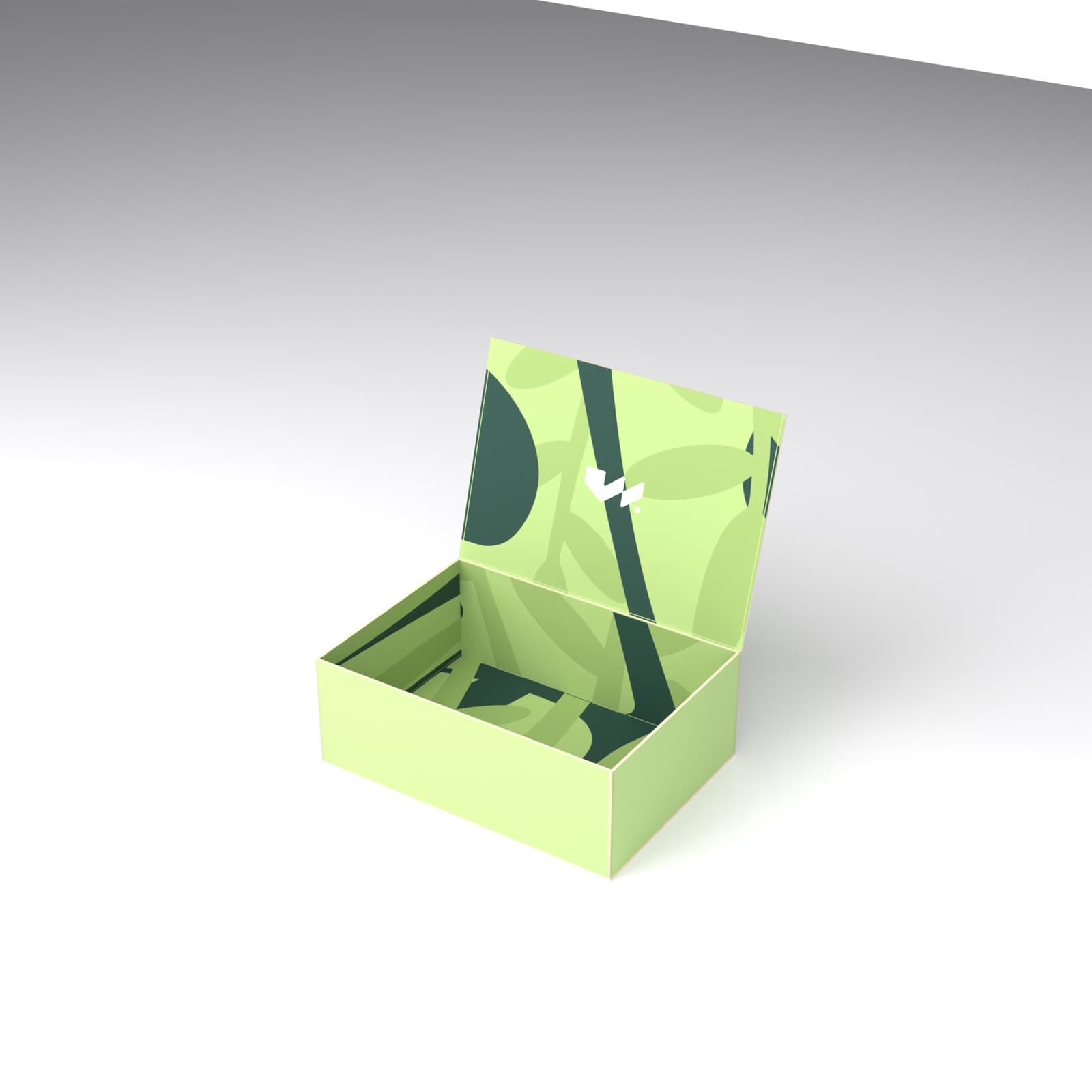
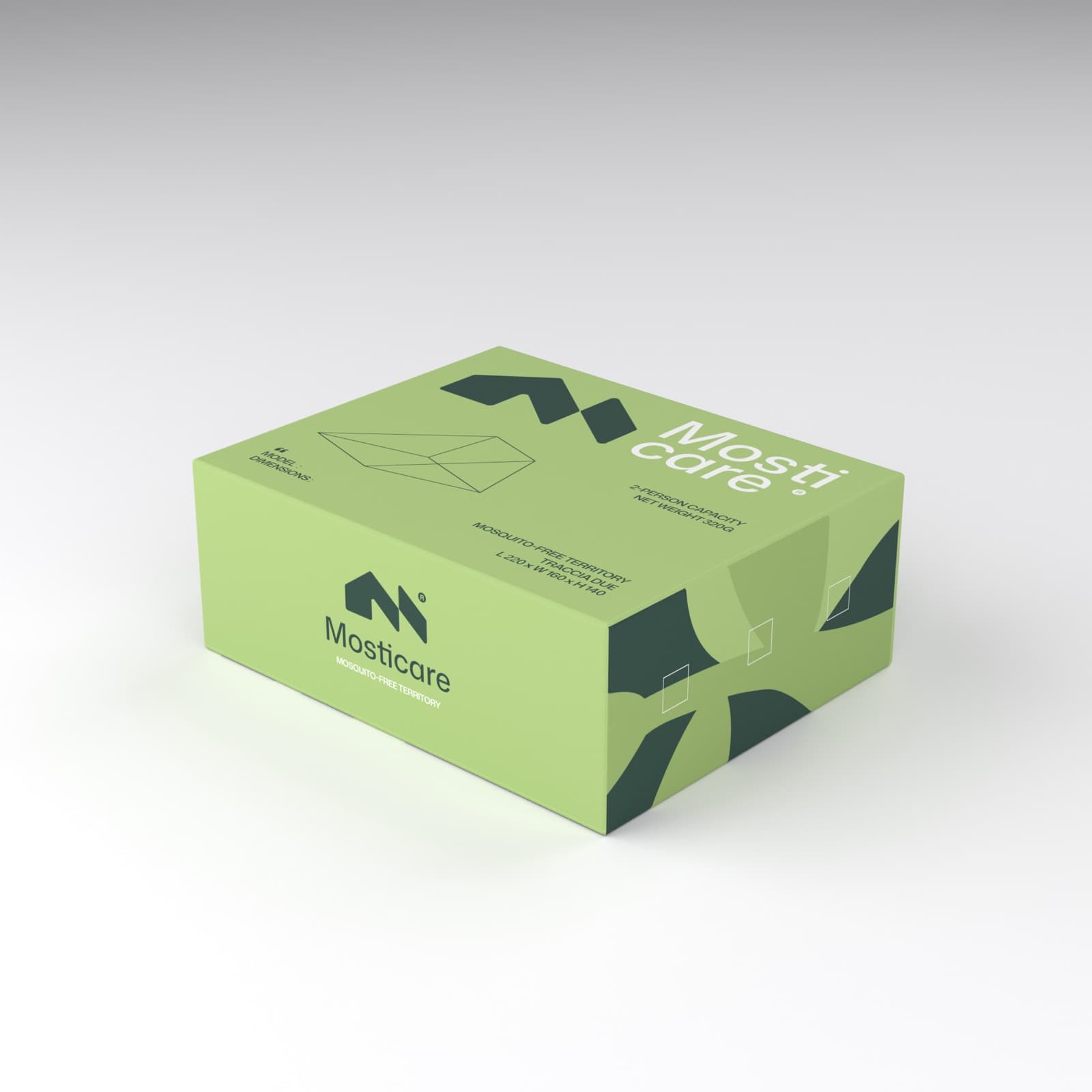
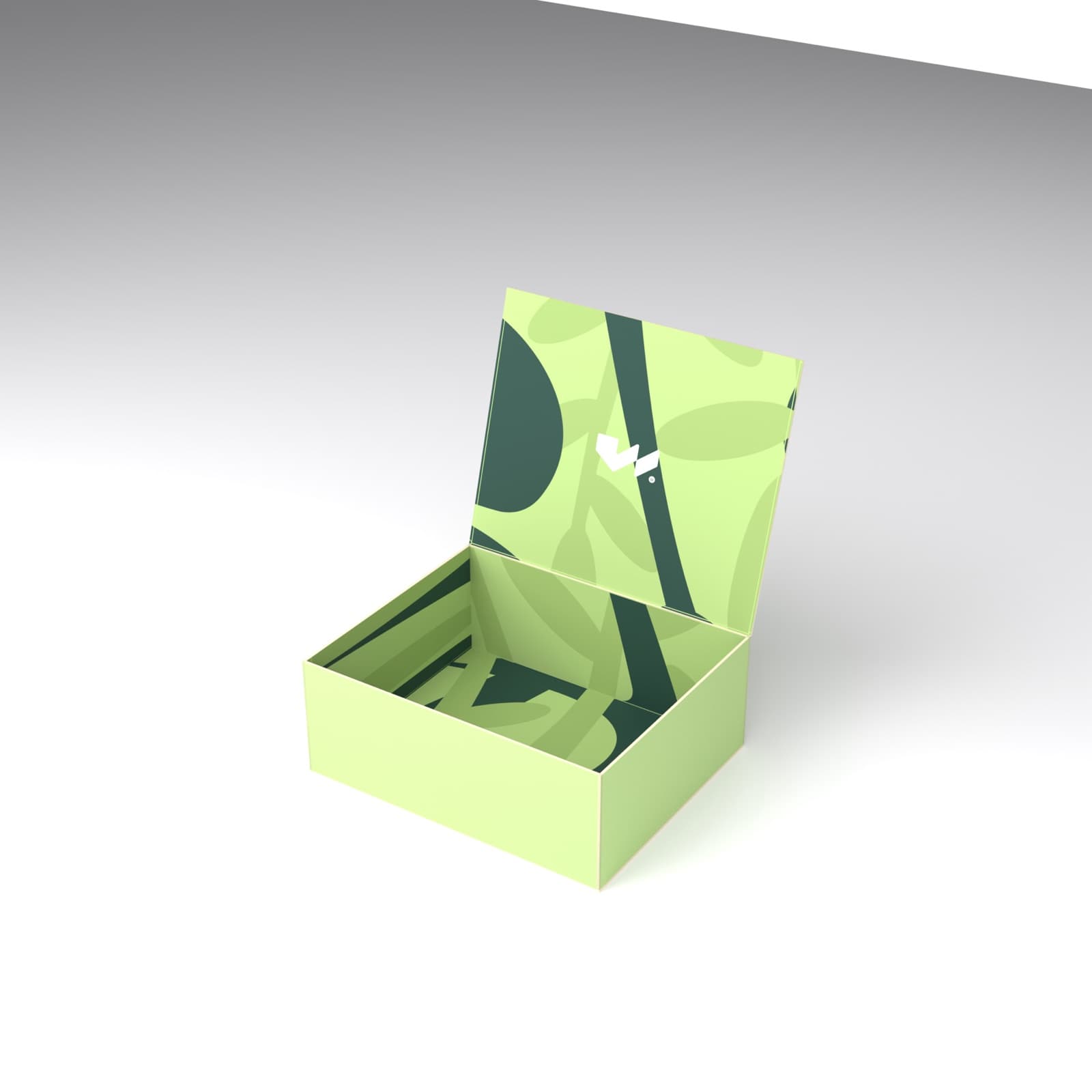
Mosticare Traccia, Travel Mosquito Net
The single-point wedge that travels in 240 g.
- Factory-impregnated permethrin, bound into the fibre, never sprayed
- Three-year effective lifecycle under normal use
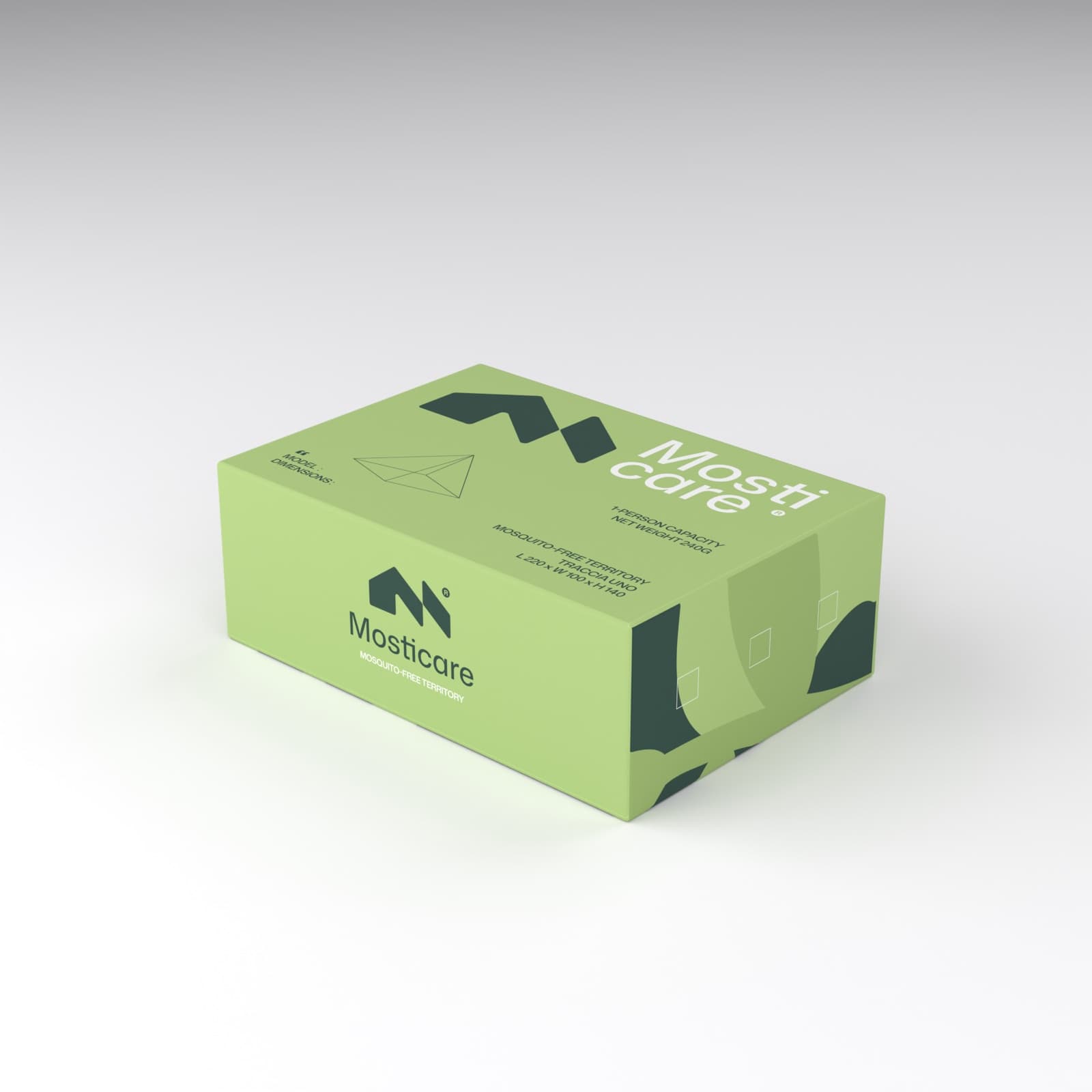
- Ships with recycled-cotton carry sachet and deployment card
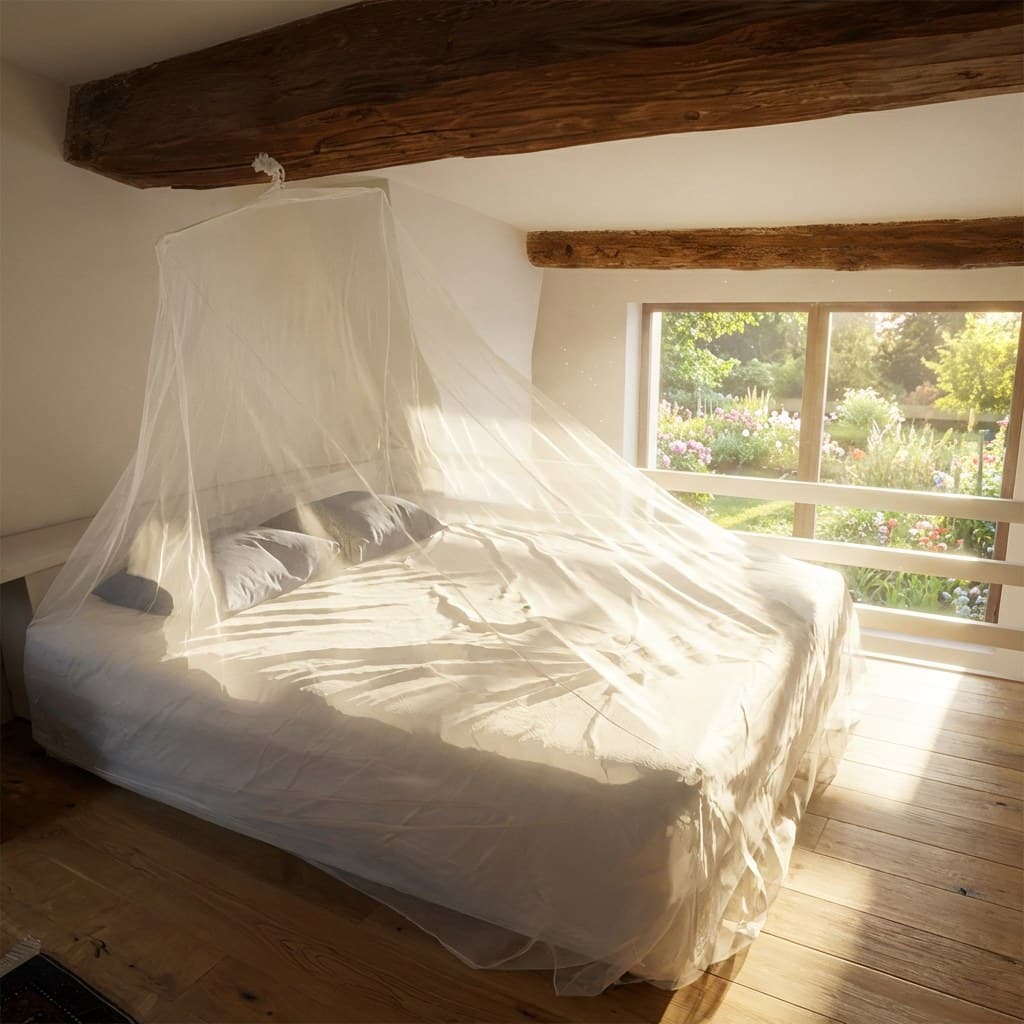
A WHO-standard travel mosquito net engineered as a single-point wedge that pitches from one ceiling hook or headboard anchor over the pillow, the fastest, lightest way to turn any hotel, guesthouse, or homestay bed into a certified physical barrier. Polyester mesh at 156-count density, from 240 g packed. Three-year effective lifecycle.
The travel bed is the one most exposed mosquito environment of an adult life. A guesthouse in Hoi An, a homestay in Chiang Mai, a riverside lodge in Iquitos, a rural auberge in the Algarve, a heritage farmhouse in Sicily, the bed is unfamiliar, the window doesn't always seal, and there is rarely a net already hung. The Mosticare Traccia is a travel mosquito net engineered for exactly this situation: a single-point wedge that pitches from one ceiling hook or headboard anchor and throws a clean, certified physical barrier over the pillow and torso in under a minute. Two sizes, Traccia Uno for the solo traveller and Traccia Due for couples, share one engineering specification and one claim stack.
What these nets are, exactly
The Traccia Uno is a single-occupant wedge measuring L 220 × W 100 × H 140 cm with a packed weight of 240 g. The Traccia Due is a two-occupant wedge at L 220 × W 160 × H 140 cm with a packed weight of 320 g. Both are knitted from durable 75-denier polyester at a 156-count density (25 holes per cm²).
Both have fibre factory-impregnated with permethrin at 9 g/kg (0.9% w/w), a WHO-recommended pyrethroid bound into the yarn during manufacture rather than sprayed onto the surface. Both variants are WHO-standard as long-lasting insecticidal nets and authorized for European Union market release under the EU Biocidal Products Regulation (authorization EU-0026815-0000 2032). The treatment stays locked into the fibre, does not leach meaningfully onto skin, and does not release into the air of the room.
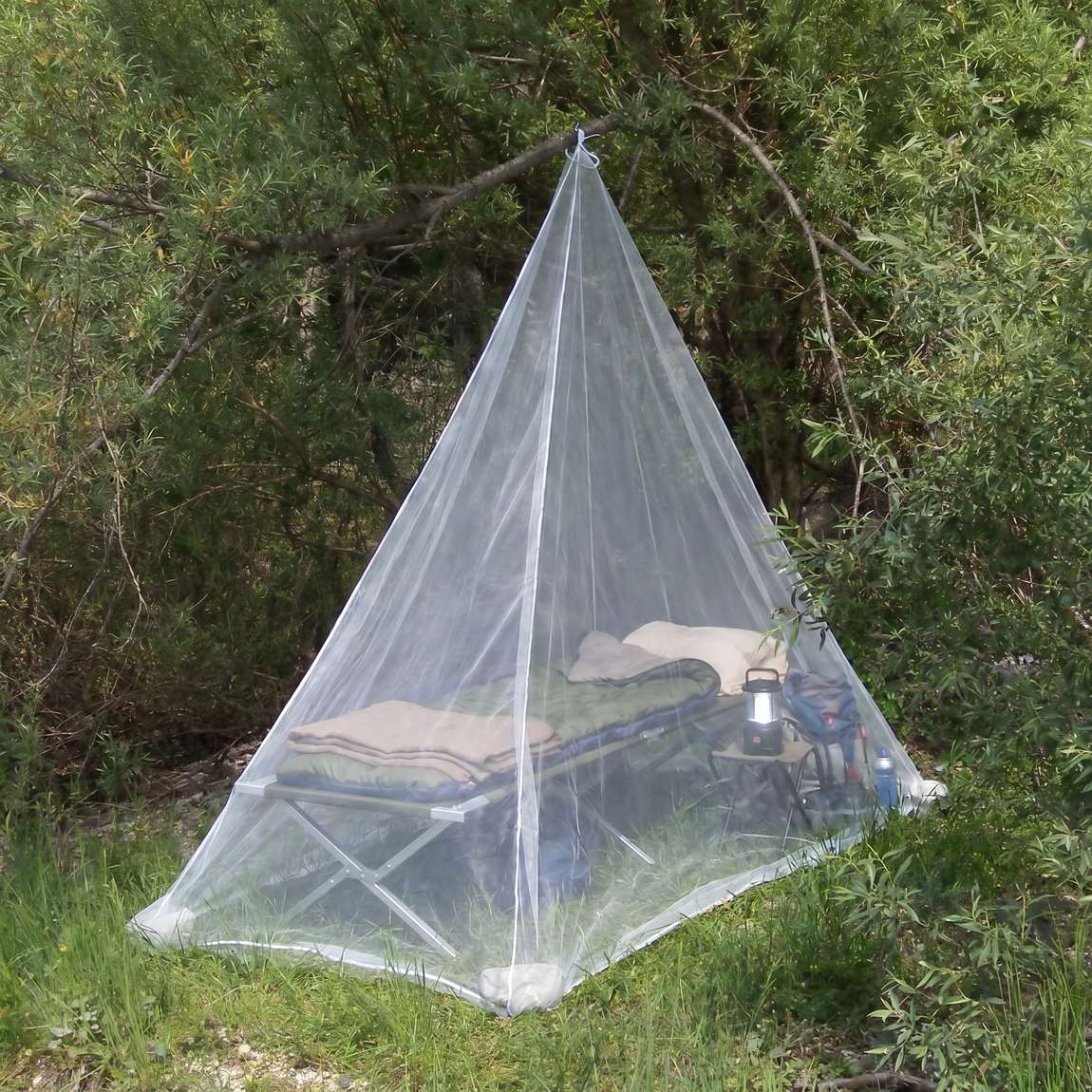
Deployment is instant: one ceiling attachment point (or headboard anchor, or overhead branch at a homestay), and the wedge tensions into shape over the pillow, no four-post frame required, no self-supporting pole system, no fiddly assembly in the dark. Colour: soft off-white. Every Traccia ships with a recycled-cotton carry pouch, a quick-start deployment card, a Mosticare three-year lifecycle card, and an invitation to the Mosticare community.
Why a physical barrier is the right approach on the road
The pharmacy shelf and the travel-shop counter want to sell you chemistry you wear, burn, or plug into the socket. Aerosol repellents applied to exposed skin. Picaridin wipes for the forearms. Plug-in mosquito mats that pump pyrethroid into the air of the guesthouse. Tropical-strength coils burning under the balcony. These are all downstream compromises, chemistry you tolerate because no one hung a net.
The Traccia replaces that compromise with a single-point physical barrier: a WHO-standard insecticidal mesh between your body and the mosquito. The permethrin in the fibre reinforces the barrier at the point of contact, bound into the yarn at a deliberately minimal dose and never diffused through the room, so the barrier does its job while the air you're sleeping in stays chemistry-free, exactly the air you also want when you're jet-lagged and already paying the metabolic tax of a long flight.
Who it's for
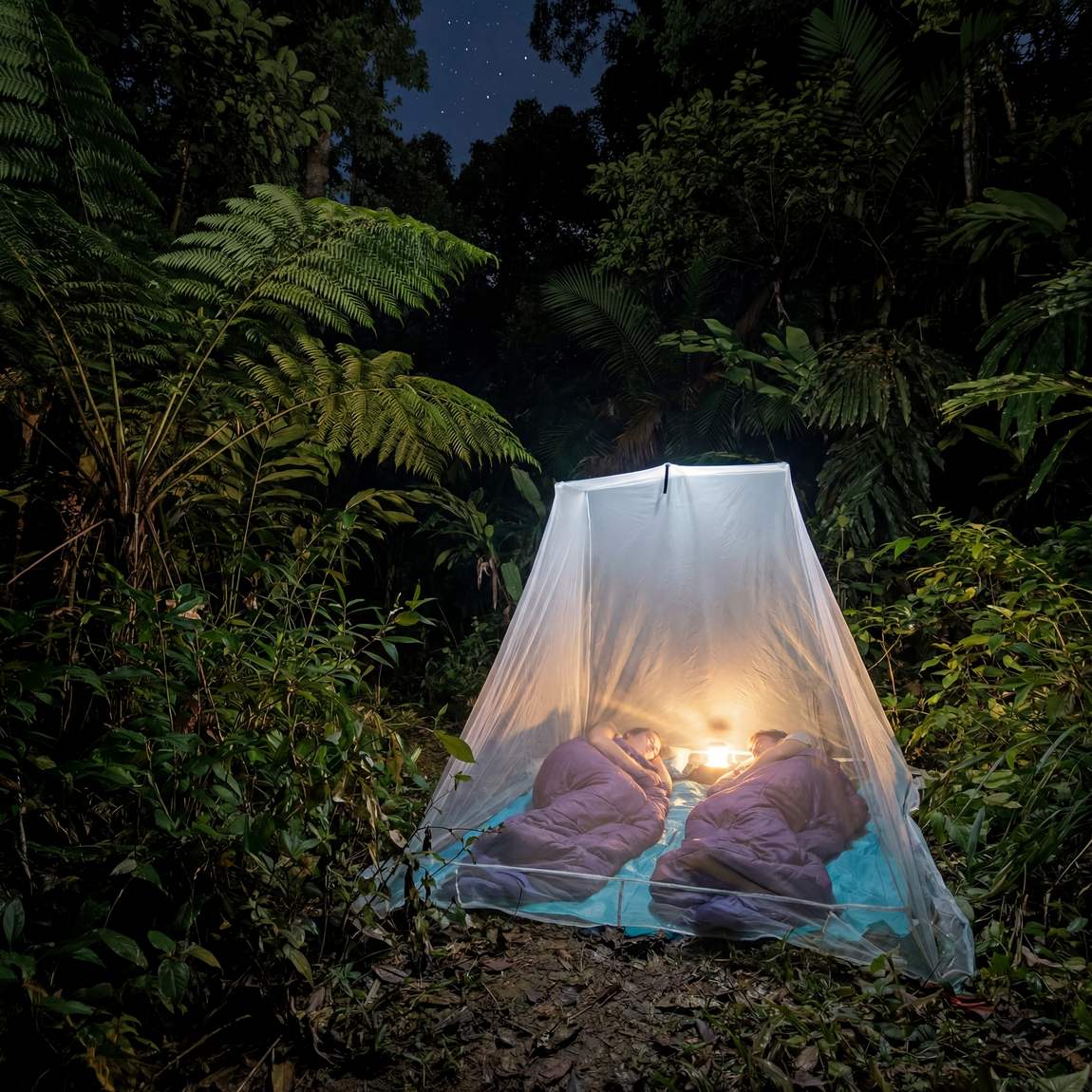
The Traccia Uno is for the solo traveller: the backpacker on a Southeast Asian loop, the remote worker on a long-haul stay in Mexico City or Lisbon, the field biologist on a river trip, the journalist in a hotel room anywhere between the Tropic of Cancer and the Tropic of Capricorn. The Traccia Due is for two travellers sharing a bed in the same environment, honeymooners, couples on sabbatical, colleagues sharing a room on assignment.
The Traccia family is not the right choice for a permanent bedroom installation over a four-poster frame (choose the Mosticare Cubo Uno / Cubo Due / Cubo Tre for that) or for a freestanding solution when there is literally no ceiling to attach to (choose the Mosticare Domo Pop). If you're trekking and sleeping in a hammock rather than a bed, choose the Mosticare Amaca Uno / Amaca Due. For outdoor activity during dusk, gardening, fieldwork, trail walking, rather than sleep, the Mosticare Volto head nets are the right tool.
How to use it well
The Traccia installs in under a minute from a single anchor point and packs back into the recycled-cotton sachet just as fast.
- Find one attachment: a ceiling hook, a picture rail, a headboard, a door frame, anything overhead.
- Pass the loop over the anchor and unfold the wedge along the length of the bed so the peak sits above the pillow.
- Tuck the hem under the mattress on both sides and at the foot, creating a sealed envelope around the sleeping area.
- For a homestay with no indoor anchor, a length of paracord tied between two wall hooks or two trees works just as well.
- Don't wash it, by design. In normal use the mesh doesn't get dirty, it just ages. Washing strips permethrin out of the fibre and into wastewater, which harms aquatic life and weakens the protection you bought. When the net reaches the end of its protective life, replace it rather than washing it.
- Expect a three-year effective protection lifecycle across typical travel use.
Every claim on this page is traceable to a standard or an independent test.
- WHO-standard long-lasting insecticidal net (LLIN), the Traccia Uno and Traccia Due share current listing on the World Health Organization standard for long-lasting insecticidal nets.
- EU Biocidal Products Regulation (BPR), authorization EU-0026815-0000 2032, both variants are formally authorized for market release across the European Union as treated articles.
- 156-count mesh / 25 holes per cm², the structural mesh density used across the WHO long-lasting-net category for mosquito bite prevention.
- 75-denier polyester fibre, independently tested, for seam strength and mesh integrity across the full three-year lifecycle.
Before you decide.
Which Traccia should I buy, Uno or Due?
Do I need to carry extra kit to hang it?
Is it safe to sleep under every night on a long trip?
What's the difference between the Traccia and a freestanding travel dome?
Will it work as a backup in a malaria-endemic region?
Mosticare exists to protect people from the world's deadliest animal without poisoning the room in which they sleep, including when that room is rented, borrowed, or unfamiliar. The Traccia is a quiet, certified way to do that from a single anchor point, in any bedroom, anywhere you land.