Mosticare Amaca, Hammock Mosquito Net
A certified mosquito net that fits a hammock.
- Factory-impregnated permethrin, bound into the fibre, never sprayed
- Three-year effective lifecycle under normal use
- Ships with recycled-cotton carry sachet and deployment card
A WHO-standard hammock mosquito net that integrates with the hammock's own ridgeline, the certified sleep barrier for jungle trekking, Central American and Southeast Asian hammock travel, and any night spent off the ground. Polyester mesh at 156-count density, permethrin-treated, from 220 g packed. Three-year effective lifecycle, European design.
The hammock is an ancient way to sleep, cooler than the ground, drier than the forest floor, off the track of crawling insects, and with the ridgeline already engineered to hold something over the sleeper. What the hammock has historically lacked is a certified mosquito net that fits it. Travellers and trekkers through the Amazon, the Darién, the Yucatán, the Mekong delta, the Borneo highlands, the Sri Lankan backcountry, and the jungles of Central Africa have made do with draped sarongs, tied-off sheets, and hope. The Mosticare Amaca is the answer: a WHO-standard mosquito net engineered specifically to integrate with a hammock's ridgeline, throwing a clean, certified physical barrier above the sleeping body while preserving the hammock's own geometry. Two sizes, Amaca Uno for solo travellers and Amaca Due for wider two-person hammocks, share one engineering specification and one claim stack.
What these nets are, exactly
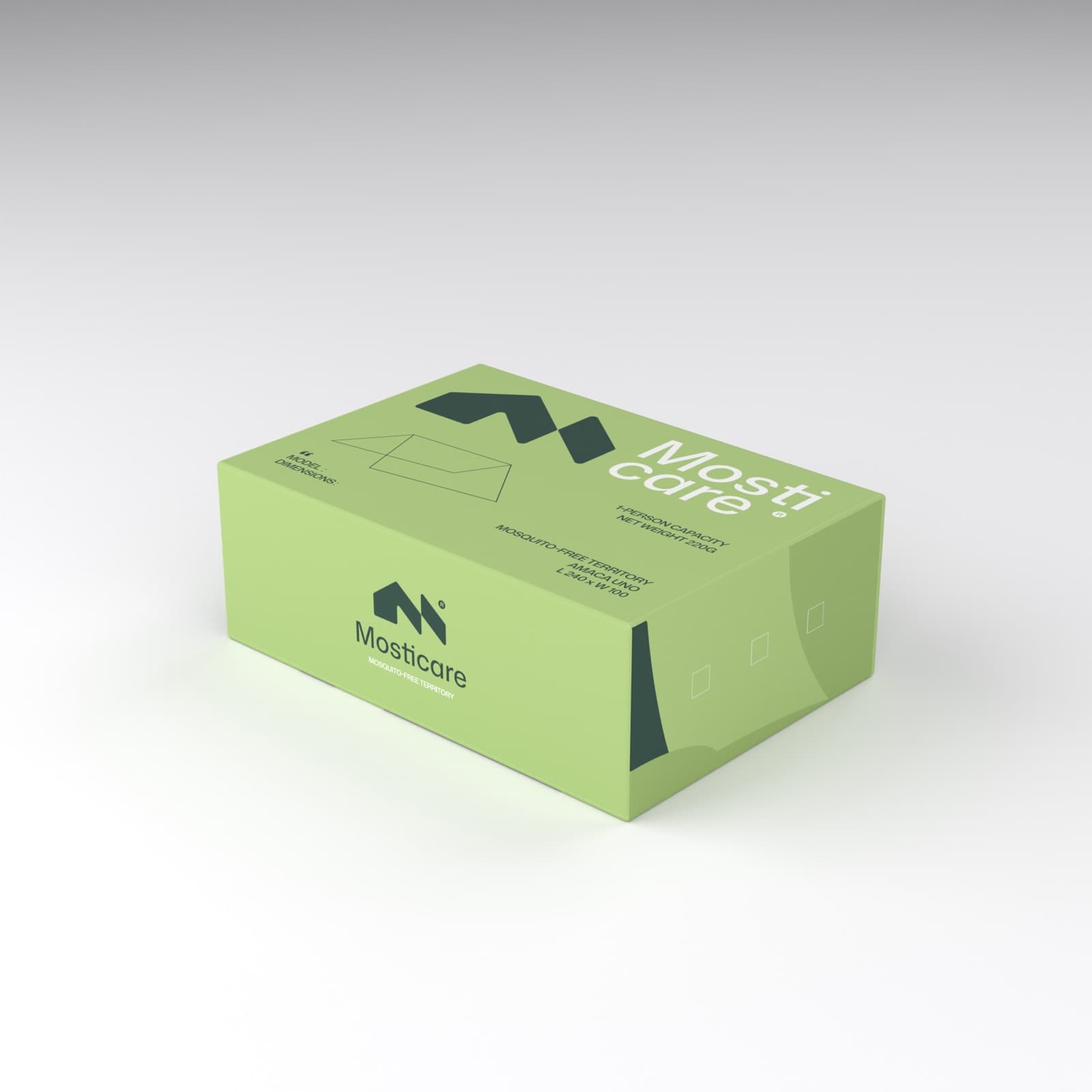
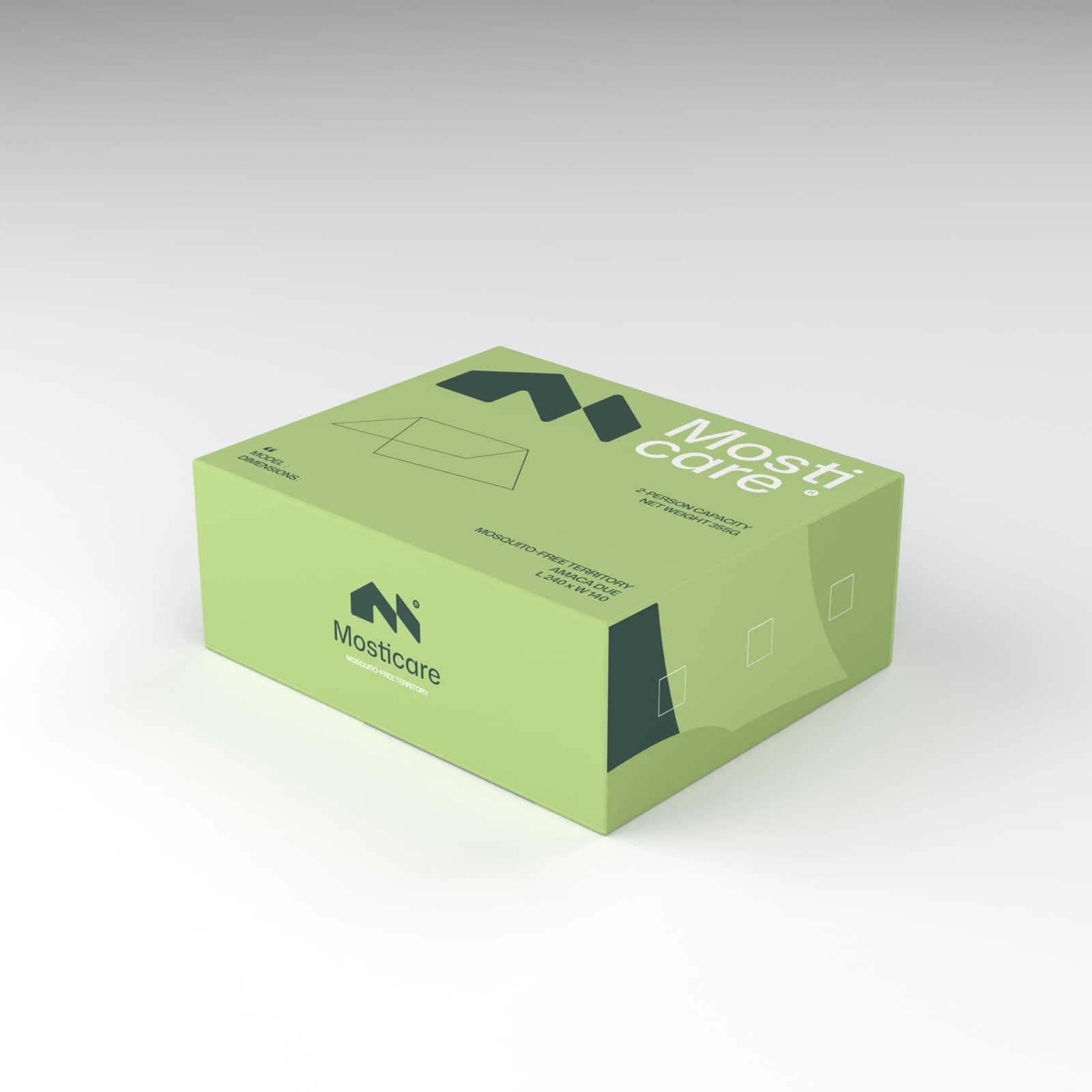
The Amaca Uno is a single-hammock net at L 240 × W 100 cm, packed weight 220 g. The Amaca Due is sized for wider or two-occupant hammocks at L 240 × W 140 cm, packed weight 355 g. Both are knitted from durable 75-denier polyester at a 156-count density (25 holes per cm²), the same WHO-standard mesh used across the full Mosticare range.
Both are factory-impregnated with permethrin at 9 g/kg (0.9% w/w), a WHO-recommended pyrethroid bound into the yarn during manufacture rather than sprayed on, so it stays locked into the fibre, does not leach meaningfully onto skin, and does not release into the air around the sleeper. Both variants are WHO-standard as long-lasting insecticidal nets and authorized under the EU Biocidal Products Regulation (authorization EU-0026815-0000 2032).
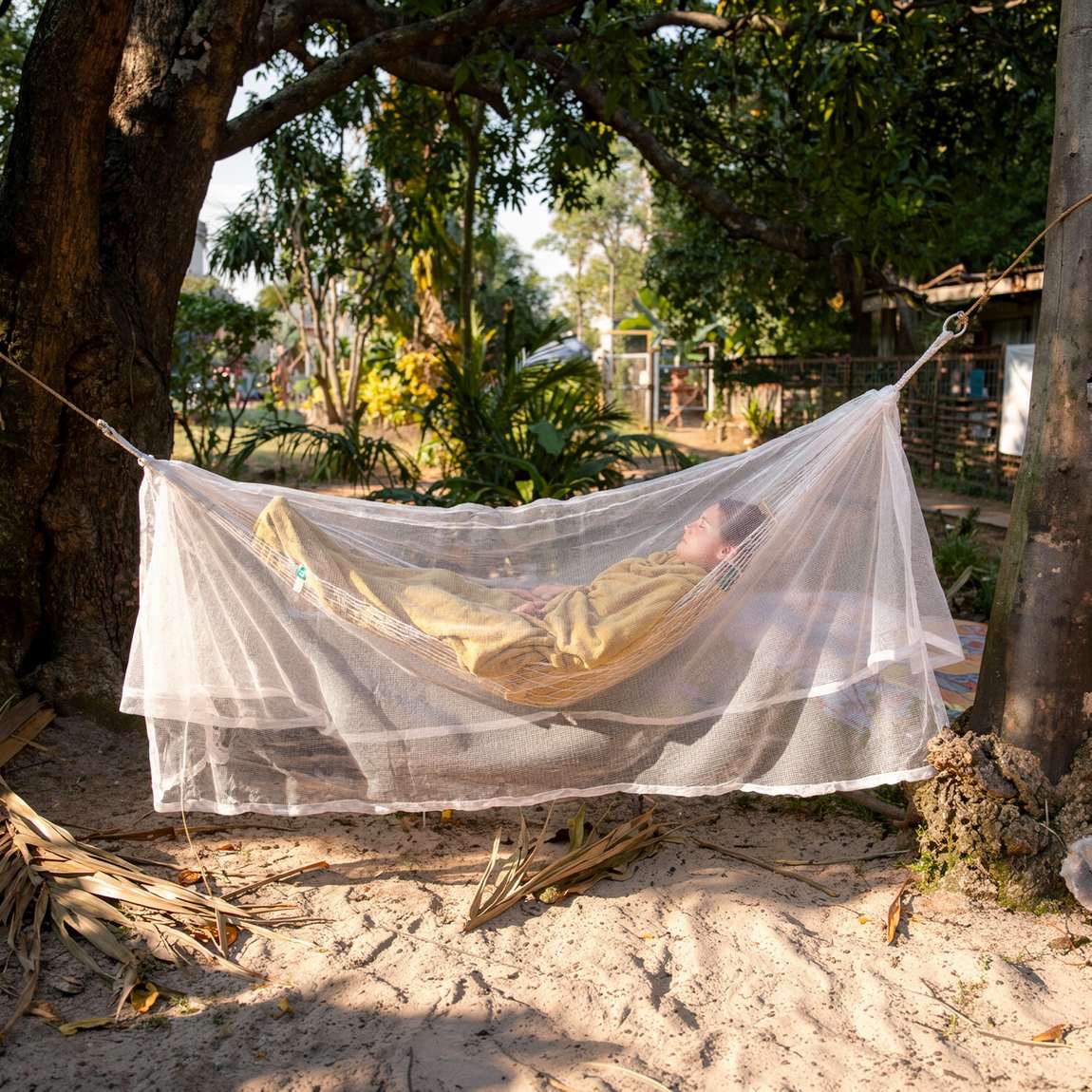
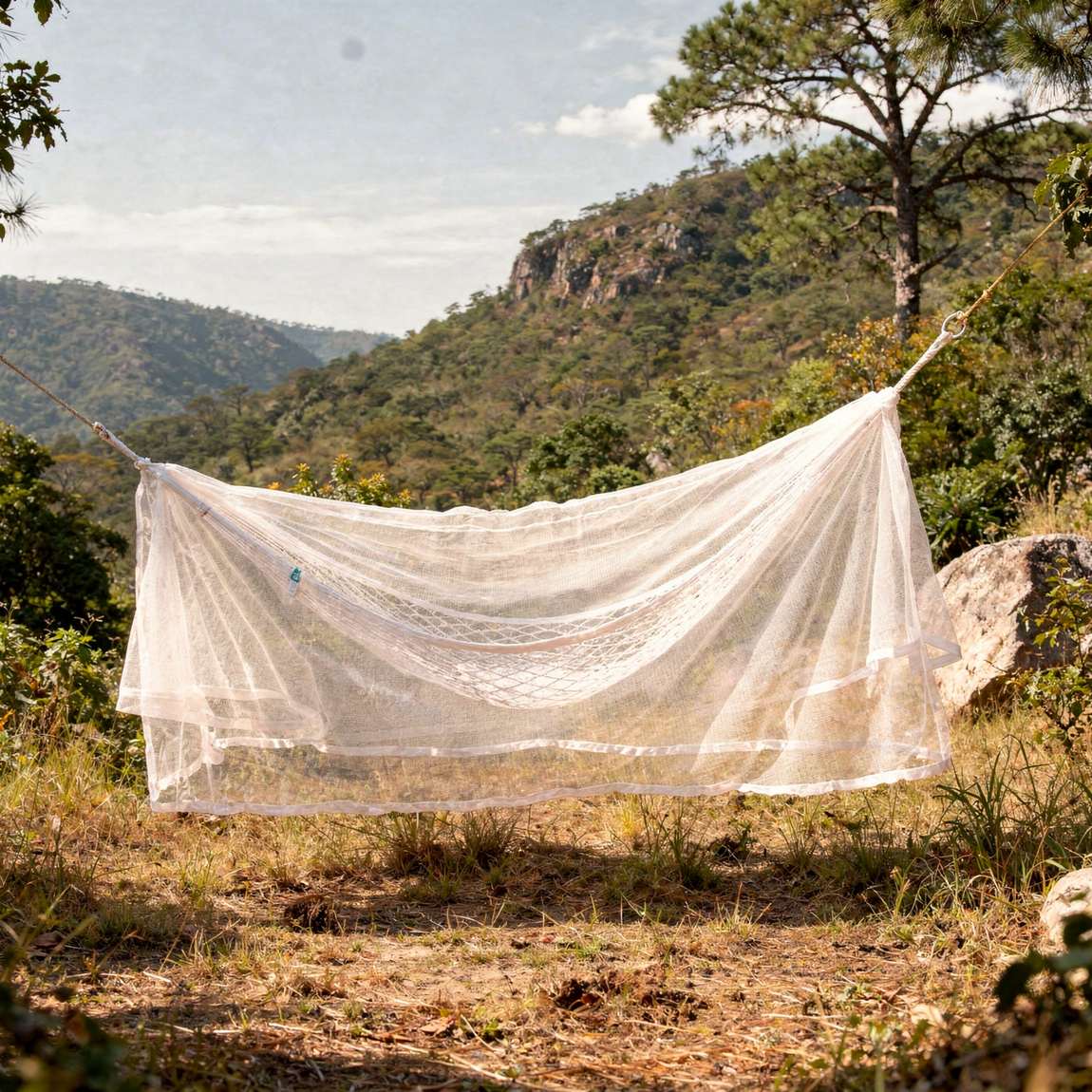
Integration is via the hammock's own ridgeline: the net drapes over the ridge cord with a long-axis channel, tensions along the length of the hammock, and tucks beneath the sleeper's back, the sleeper effectively slides into an enclosed mesh cocoon suspended from the same two trees as the hammock itself. Colour: soft off-white. Every Amaca ships with a recycled-cotton carry pouch, a quick-start deployment card, a Mosticare three-year lifecycle card, and an invitation to the Mosticare community.
Why a physical barrier is the right approach for a hammock
Hammock travel through the Americas and Southeast Asia has always sat at the sharp end of the mosquito-protection compromise, because the bed is outdoors, airborne chemistry is useless (the air moves), and skin-applied repellents wear off hour by hour across eight to ten hours of night sleep. What remains is the physical barrier: a mesh between the mosquito and the sleeping body that holds for the entire night without re-application.
The Amaca is that barrier, engineered for the specific geometry of a hammock, which is to say, engineered to integrate with a ridgeline rather than to hang from a ceiling. The permethrin impregnated into its fibre reinforces the barrier at the point of contact, bound into the yarn at a deliberately minimal dose and never diffused through the outdoor air, so the chemistry stays on the outside of the mesh and the jungle air around the hammock stays jungle air.
Who it's for
The Amaca is for hammock travellers sleeping in malaria- and dengue-vector environments: jungle-trek backpackers, river-boat passengers on long routes through the Amazon basin, ecotourism guests in Central American lodges, long-stay backpackers in Southeast Asia, volunteers on tropical conservation and development projects, and field biologists on multi-week transects through forested terrain.
Uno is the default for solo travel; Due is for wider hammocks (Brazilian two-person hammocks, wider Mayan-style hammocks, and couples who hammock together). For a tent or a hostel bunk, use the Mosticare Domo Pop (freestanding) or Traccia (hanging). For the bedroom back home, use the Mosticare Cubo or Rondo canopies. The Amaca is specifically for hammock sleep, it will not tension correctly over a rigid-frame bed.
How to use it well
The Amaca integrates with any hammock that has (or can have) a ridgeline, and most modern travel hammocks do.
- String up the hammock as normal between two trees or posts, and run a ridgeline above it between the same two anchors (most hammocks with a bug-net loop ship with a ridgeline; any length of paracord does the job).
- Drape the Amaca along the ridgeline so the long-axis channel runs over the ridge cord; the mesh falls symmetrically to either side.
- Enter the hammock through the side flap; tuck the hem of the net under the hammock body along its length so the mesh is sealed beneath your back when you lie down.
- Inspect the mesh for snags before each trip; repair small damage with the Mosticare Net Repair Kit.
- Don't wash it, by design. In normal use the mesh doesn't get dirty, it just ages. Washing strips permethrin out of the fibre and into wastewater, which harms aquatic life and weakens the protection you bought. When the net reaches the end of its protective life, replace it rather than washing it.
- Expect a three-year effective protection lifecycle across jungle-travel use.
Every claim on this page is traceable to a standard or an independent test.
- WHO-standard long-lasting insecticidal net (LLIN), both Amaca variants share current listing on the World Health Organization standard for long-lasting insecticidal nets, the gold-standard specification referenced by the WHO, UNICEF, and the Global Fund.
- EU Biocidal Products Regulation (BPR), authorization EU-0026815-0000 2032, both variants are formally authorized for market release across the European Union as treated articles.
- 156-count mesh / 25 holes per cm², the structural mesh density used across the WHO long-lasting-net category.
- 75-denier polyester fibre, independently tested, for seam strength and mesh integrity across the full three-year lifecycle.
Before you decide.
Does the Amaca work with any hammock?
Which Amaca size do I need?
Is it safe to sleep under every night in a jungle?
Does it protect against mosquito-borne diseases like malaria or dengue?
Can I use it over a hammock in a hut, or only outdoors between trees?
Mosticare exists to protect people from the world's deadliest animal without poisoning the air around the sleeper, including when the sleeping body is in a hammock between two trees. The Amaca is a quiet, certified way to do that anywhere a hammock can be hung.